
Ranae walking through a corn field that she cultivates with a sharecropper.
 They bend the matas (stalks) in half and leave the mature corn in the field so that the corn kernals dry out. This takes a few months and since they can practically continually plant and harvest on the land year round due to the consistent climate, they replant new corn below the old. So here you see the dried corn stalks and the new ones that are still growing.
In this picture Junior (12 year old boy in back) and Fatima are 'tapiscar-ing'.
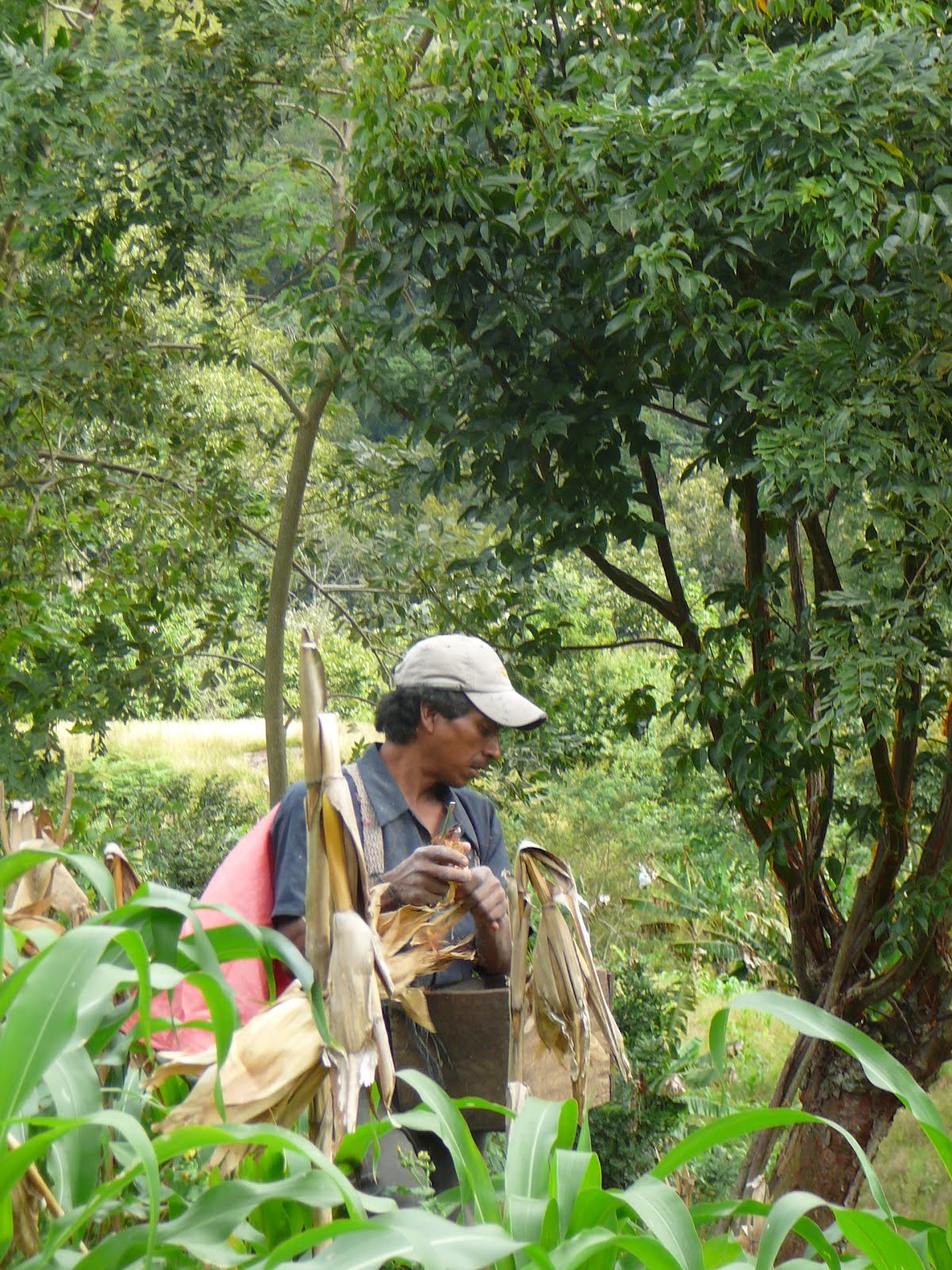
Tapiscar is the vocab word which means to take the mazorca (dried corn cobs) off of the mata (stalk).

This is Aura, the mom in the house that I lived in. She sharecrops this field with Ranae. It is Ranae's land, so Ranae puts forth the land, seed, and half of the money for pesticides and fertilizers, while Aura puts forth the labor and other half of the money necessary.
-

We picked about 30 huge bags (see picture below) in an 8-hour day.

Hauling the sacks of mazorca up the hill to the house for more work later.

These were some of the critters crawling all around me on the dried corn stalks!! Yep, it's a spider.
 -
 -

the spider's belly

Gorgeous, gorgeous scenery was our backdrop no matter where we went or what we did.

-

-

-

This is Ranae in her house (which she isn't living in yet). All the sacks were hauled here (they weighed over 100 pounds so they didn't make the ladies haul them). Then we spent a week 'podridar-ing'. This means we pick out the bad kernals that have rotted or started to seed or have been eaten by bugs. This waste we feed to the pigs and chickens. I am sitting across from Ranae doing the same thing.

This is the good mazorca (corn cobs) that is left. You can see that some are full of granos (kernals) and some are almost empty, but all the granos left are good. Then we 'desgranar' to take these off and keep the good granos in sacks to use for tortillas or the special treat of nacatamales.

-

-

-

This is Ranae in her house (which she isn't living in yet). All the sacks were hauled here (they weighed over 100 pounds so they didn't make the ladies haul them). Then we spent a week 'podridar-ing'. This means we pick out the bad kernals that have rotted or started to seed or have been eaten by bugs. This waste we feed to the pigs and chickens. I am sitting across from Ranae doing the same thing.

This is the good mazorca (corn cobs) that is left. You can see that some are full of granos (kernals) and some are almost empty, but all the granos left are good. Then we 'desgranar' to take these off and keep the good granos in sacks to use for tortillas or the special treat of nacatamales.

If all the granos did not dry in the field, we set them out to dry the rest of the way so they don't mold when we store them. This is the patio at the house where I lived.
 When they're ready to make tortillas, they rinse them to get off any dirt or powder or shells. (I barely helped with the cooking part as I mostly worked outside.)

Then they cook them over the 'hornilla' with some water and stir them for an hour or so in the evening. They let them sit for the night. . .

and in the morning they grind the corn. Here I am grinding with a hand grinder while Juana makes the tortillas. I tried to make tortillas but don't have the double hand slap down well enough that they fluff in the middle =( Juana is still learning as well, but is pretty good for 11!

The house I lived in fed a lot of farmworkers everyday (anywhere from 5-40 in addition to the 9 family members who lived there), so they use this machine.
 The women all have a small piece of wax paper that they lay out to use every day, and then wash and fold up carefully when they finish making tortillas. They take some corn dough and pat the tortillas out on it every morning.

then cook them in the comals over the hornilla.

And here are our fresh tortillas!! Many women get up several hours early to make these fresh every day-and they are delicious!


